Ticking time bomb in the Baltic Sea
After the Second World War, Allied forces sank thousands of tonnes of ammunition and weapons off the Baltic coast. There, where people relax and animals live, a time bomb is ticking.
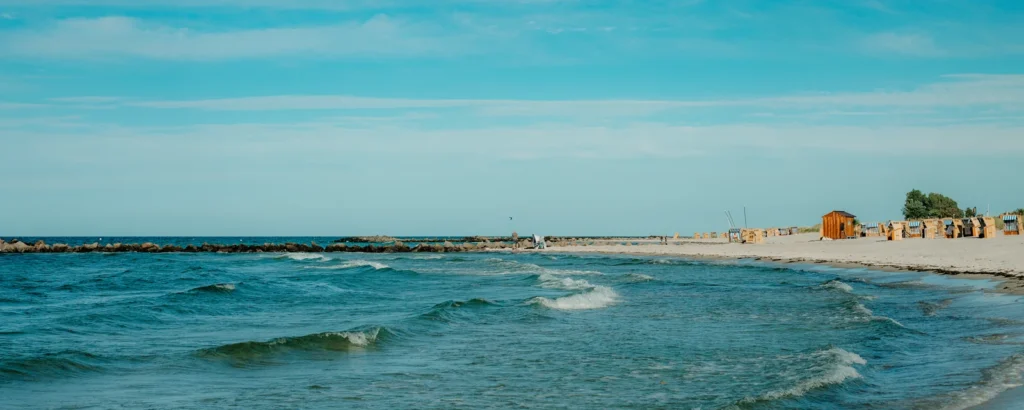
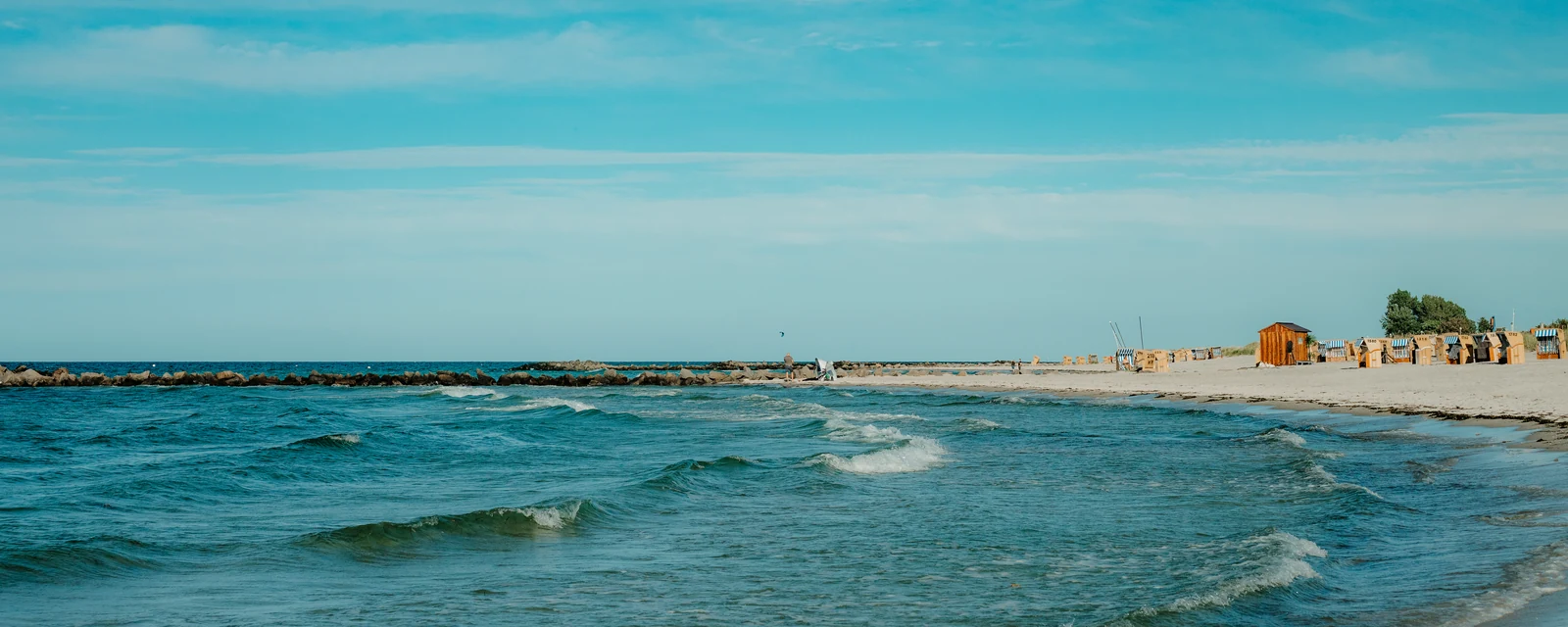
In Kalifornien on Germany’s Baltic coast, all is well at the moment. This little municipality differs from its larger namesake, the US state of California, not just in spelling but also in atmosphere: rather than boasting a major seaside resort such as Santa Monica, it offers sparsely populated, idyllic views to the open sea. Occasionally, the odd container ship will pass on the horizon, so distant and small you feel you could almost flick it away with your finger. The beach, about an hour’s bus ride east of Kiel, was allegedly named after a ship fragment bearing the name California that had washed ashore. This northern German Kalifornien offers exactly the type of picture-perfect scenery you would associate with the words “Baltic Sea”. Families and pensioners relax in the traditional canopied beach chairs sprinkled along the beach while sports enthusiasts pursue more energetic activities. The wind sweeps through the dune grass; everyone is well and happy.
About three kilometres west of Kalifornien lies Colberg Heath, not a heath at all, but a marine munitions dump. When Nazi Germany surrendered in May 1945, the Allied Forces had to decide what to do with the millions of tonnes of intact munitions. British forces were concerned that a guerrilla war could break out if the weapons were not disposed of. The simplest solution: dump the munitions into the sea. A cheap and easy fix. In the post-war years, the fact that unexploded ordnance might harm the environment was considered a secondary concern; moreover, it was standard practice worldwide to dispose of weapons and waste in the sea. Coastal countries that were embroiled in wars during the 20th century bear this burden to this day. Initially, the assumption was that harmful substances such as TNT, mustard gas or phosphorus would be diluted by the vast volumes of water and eventually dissolve.
The same was believed to hold true for radioactive waste. From 1946 onwards, the USA, the United Kingdom, Switzerland and the Soviet Union dumped barrels full of radioactive material into the world’s oceans. It was not until 1994 that the practice was banned under an amendment to the London Convention on the Prevention of Marine Pollution by Dumping of Wastes and Other Matter. The dumping of military munitions was already banned in 1975.
One central question: who dumped it? The British or the Soviets?
Torpedoes, grenades, sea mines, anti-tank systems: in total, around 1.6 million tonnes of munitions were dumped in the North Sea and the Baltic Sea. V1 missiles, too, have been lying submerged for around 80 years. Each missile warhead is made up of around 850 kilograms of TNT. The Baltic Sea harbours a total of around 300,000 tonnes of various types of unexploded ordnance. Most of it is German munitions which remain intact even if the Allied Forces did remove some of its fuses before dumping them in the sea. Unexploded Allied bombs also lie submerged – bombs that were shot down or dropped to ensure safe landings, but which failed to explode.
In the coastal state of Mecklenburg-Western Pomerania, formerly part of the Soviet occupation zone, the weapons were dumped into the sea without any records or maps. In Schleswig-Holstein, the procedure was different: in impeccable British manner, the munitions were sorted into categories: naval or land-based, small arms packed into wooden crates or large arms. In Colberg Heath alone, off the Kiel Fjord, around 30,000 tonnes of munitions were disposed of. There, they are rusting away, sometimes barely ten metres deep and less than two kilometres from the nearest beach.

The Kiel Fjord bears no signs of bombs or destruction. The waterways in the narrow bay, which juts into the heart of the coastal town, are busy with ferries, sailing boats and skyscraper-tall cruise ships all sharing the water. In June, the nearby seaside resort of Heikendorf got a glimpse of what lies dormant beneath the water’s surface. “It looked like a stale bread roll,” remembers Sylvia Soggia. She is the first chairperson of the Heikendorf seaside resort, a small swimming club with a bathing area; a U-shaped, concrete jetty with wooden benches, white plastic chairs and a metal slide jutting out a few metres into the water.
Sylvia Soggia, herself a swimmer, loves this place: the little bathhouse where you can change, a kiosk and a remarkable collection of brightly coloured rubber animals. One of the lifeguards was about to kick the “stale bread roll” back into the water, but as it rolled across the concrete part of the jetty, it suddenly turned into a fireball. Clearly, this was no bread roll: this was white phosphorus. It was used in chemical military weapons, presumably dating back to the Second World War. Underwater, phosphorus can remain stable for decades. It also remains highly toxic. Under anoxic conditions, it can release phosphine, which is lethal to fish and other marine organisms.
When white phosphorus dries out, body temperature is enough to ignite it. For the seaside resort, otherwise used for swimming, playing and relaxing, this was the first time that unexploded ordnance had washed up on its jetty. “We didn’t have any guests yet; we were busy getting ready for the season. Our lifeguards instinctively did the right thing by kicking ‘the bread roll’ back into the water,” says Soggia. When the lump of phosphorus drifted back towards the beach, they collected it in a bucket of water and called the police and then the Explosive Ordnance Disposal Unit. If not for the fiery display, the phosphorus would have remained undetected. The club circulated photos by email so that everyone would know what to do in case of doubt. The lump found in the seaside resort was comparatively large and misshapen – not the sort of thing you would normally pick up and pocket. Smaller finds are trickier: many beachgoers mistake them for amber, collect the little nuggets and put them in their pockets. “Then suddenly your trousers are on fire,” says Soggia.

Barren zones
The threat posed by the munitions legacy is subtle. The bombs have not yet rusted through completely, and very little explosive material is leaking into the sea. “For me, as a swimmer, the water always feels the same,” says Soggia. That is why bathers have not been particularly concerned about the munitions so far; they are aware of the issue, but it does not affect their daily lives, she continues. Out of sight, out of mind – even though some of the bombs weigh several tonnes and were designed to wipe out entire stretches of land.
Animal welfare and environmental organisations have been warning for years about the potential consequences of munition corrosion. TNT is carcinogenic to humans and animals. Some flatfish from maritime exclusion zones harbouring munitions are already showing an increased incidence of liver tumours, and mussels from critical zones have also been shown to absorb the pollutants. Aside from the explosives, the munitions also release heavy metals such as mercury, arsenic and lead into the water. The measured levels are slightly elevated in some of the submersion areas, but this does not yet pose a threat to the food chain. However, this may change as corrosion progresses. Once the pollutants enter the water, there is no turning back. The Baltic Sea already faces enough problems: due to the slow circulation of the inland sea, there is little water exchange. As a result, maritime conditions are sensitive. Fertilisers and other waste were dumped into the sea for years; shipping and industrial fishing are further destabilising maritime conditions. There are marine dead zones in the Baltic Sea where nothing grows or lives.
Why not at least recover the bombs from the bottom of the sea before the explosives end up in the water and in our food chain? Unfortunately, there is no straightforward solution. The sea brings together many different interest groups, all of whom depend on the sea for their livelihoods. The shipping industry, the tourism sector, water sports enthusiasts, fishermen, politicians – who in recent years have increasingly used waterways as a political tool – or people who simply want to gaze at the horizon in peace and quiet, without having to think about world wars and bombardments. This makes it difficult not to get bogged down by individuals fighting for their interests. Added to this are legal matters: in principle, no coastal state is obliged to recover munitions from the sea.
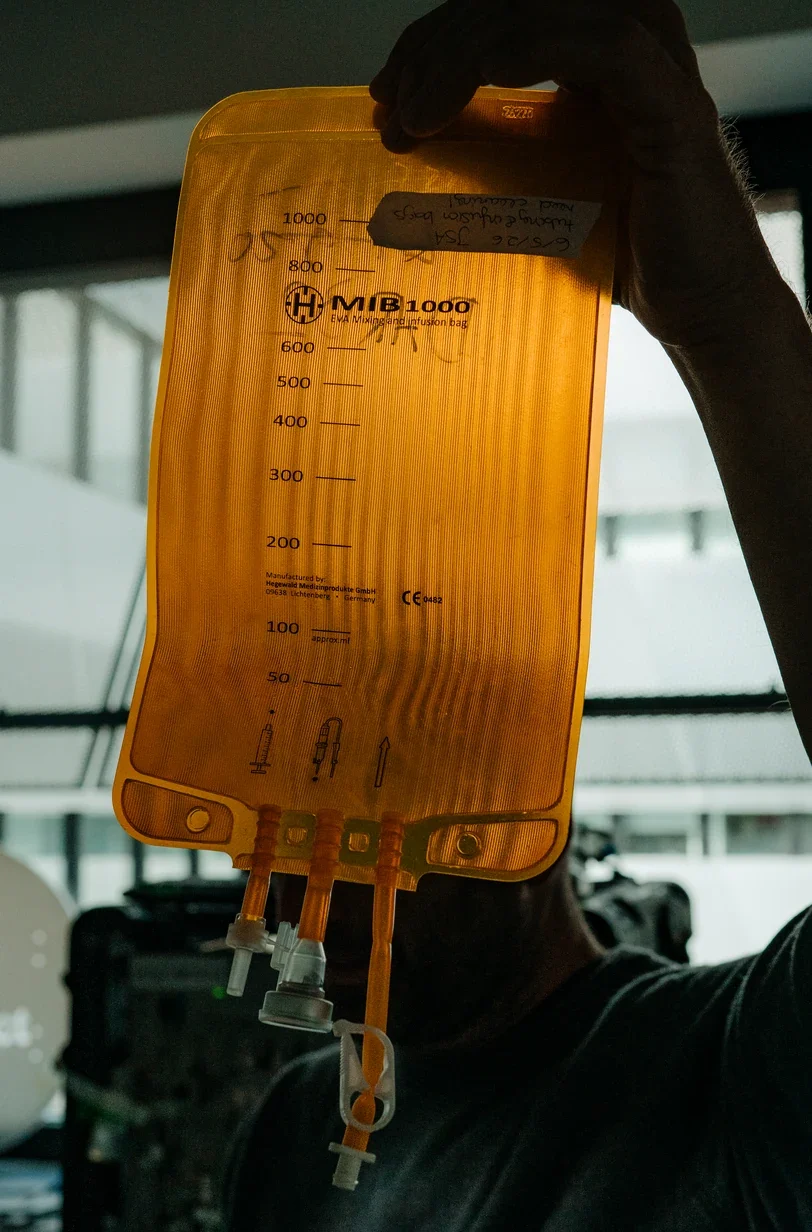
Once the bombs have rusted through, the peril will become imminent. “We do not know for sure that the TNT levels will be high enough to cause problems,” says Dr. Aaron Beck of the GEOMAR Helmholtz Centre for Ocean Research Kiel. “But we cannot rule out the possibility, either.” The rust-red building made of Corten steel, where Beck works, resembles a fragment of a naval mine, which he is holding up to the midday sun. Together with other research groups, the chemist is working to drive forward the planned recovery project. In his view, the most important step in recent years was to map and visualise data: only when you see how the bombs on the seabed are slowly turning into an artificial reef, with starfish, seaweed and fish growing and circling around the warheads, does the paradox become clear. Weapons designed to cause maximum destruction, set against a backdrop of nature that elicits wistful sighs from people and adorns smartphone screens. Over the last three years, Beck has been developing a portable water analysis device to detect TNT and other explosives in the sea. He and his team have already made considerable progress with the research, documentation and analysis. “Now, we have to put this device to use.”

Surprises in places considered to be safe
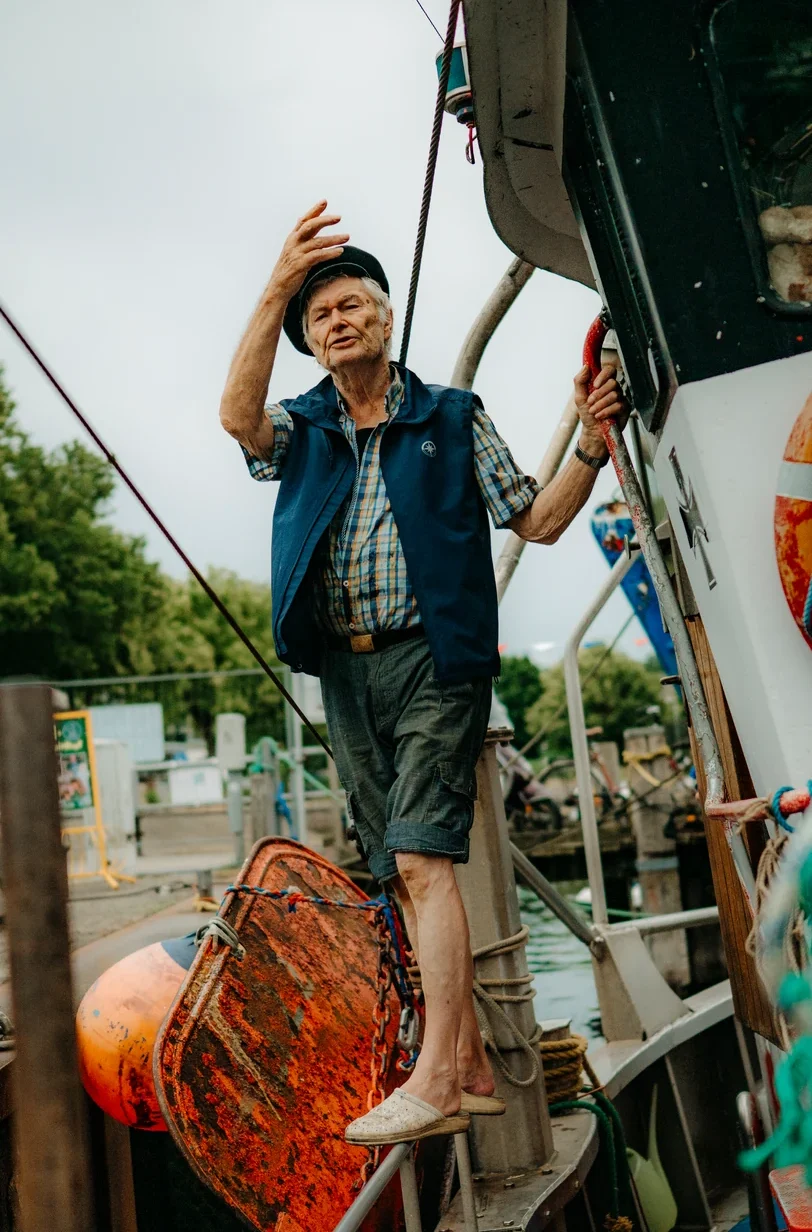
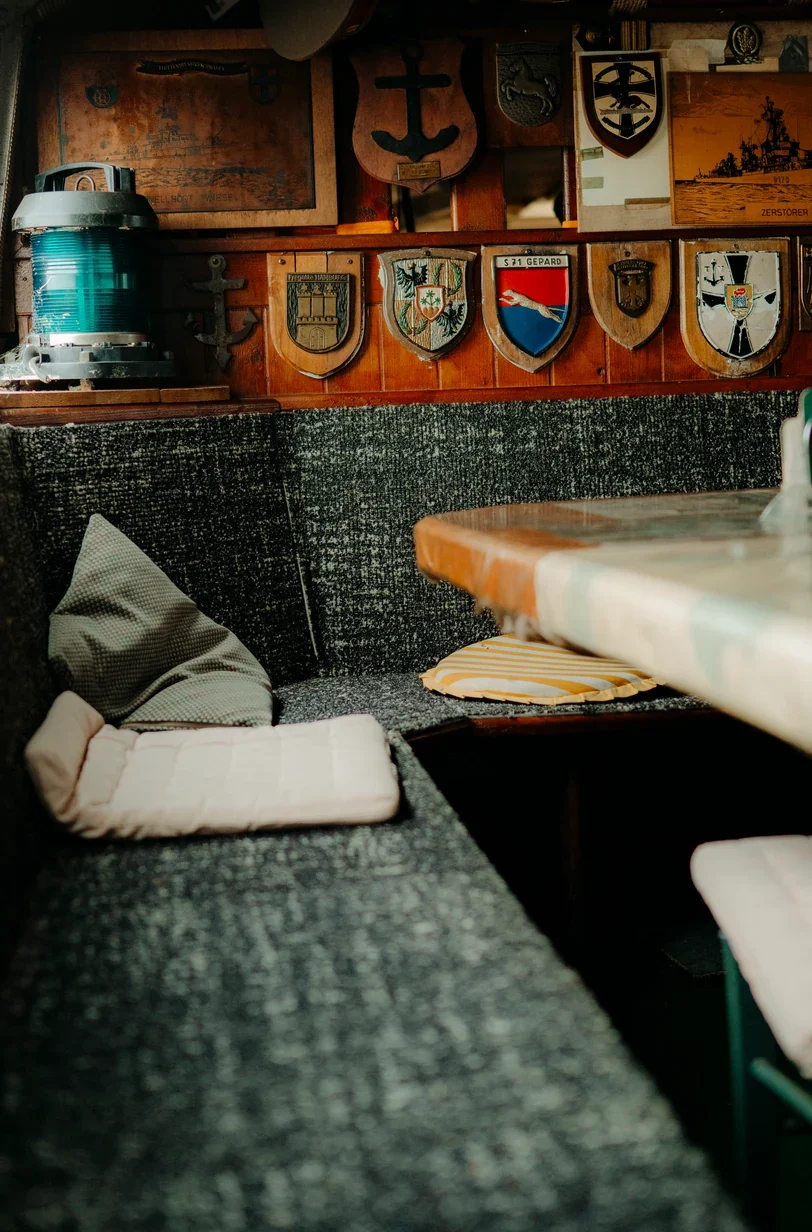
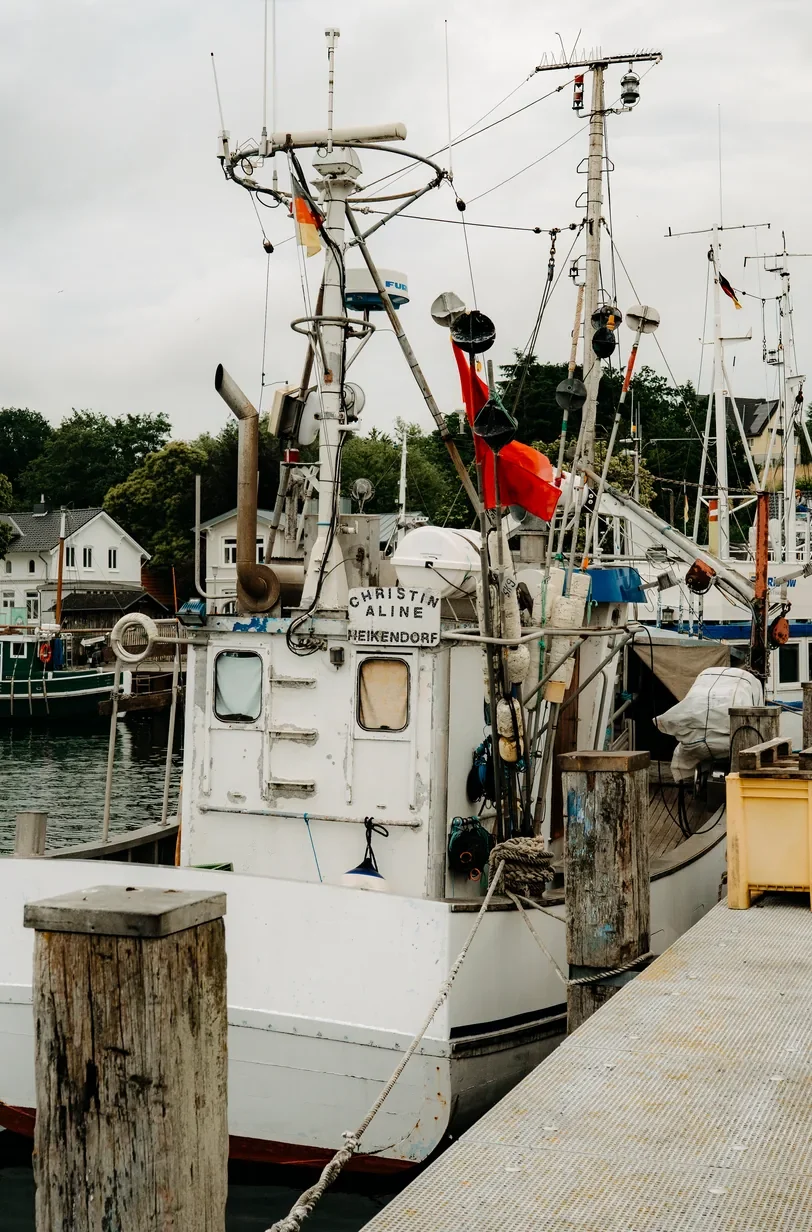
So, fish it out, dispose of it somewhere else, and carry on bathing? Fishermen, in particular, have been finding munitions in their nets for decades; there are few reports of accidents. One of these fishermen is 78-year-old Konrad Fischer from Heikendorf. He still goes out to sea in his 90-year-old cutter, the “Maria”. Fischer knows all about what lies on the seabed, both big and small. “It’s nothing but trouble,” he says as he tidies up his fish-frying boat, the “Elke”, from which he sells fish sandwiches, beer and “Schwarze Sau” (black sow) – a liquorice schnapps – on Saturdays and Sundays. The known dumping zones are officially off-limits to fishermen. However, as the British used to drop munitions not only in the designated areas but, in some cases, while still en route to them, there are still frequent surprises in places that ought to be clear of them. This makes it difficult to pinpoint exactly where the munitions are located. “You get used to it,” says Fischer, leafing through a photo album as he looks for pictures of the last naval mine that ended up on his cutter, which was over one metre in diameter. He recalls that, decades ago, there was a proposal to pay commercial fishermen to recover munitions. Just as they were paid in the post-war years to dump the munitions in the very place from which they now have to be removed. The proposal was rejected – it was too dangerous. Furthermore, the recovery of special military waste is strictly regulated by law. Fischer recalls that he once had an aluminium bomb on board. He knew the material was valuable, which is why he sawed the bomb in half. “I don’t know whether I was being brave or just foolish.” In the end, he call the Explosive Ordnance Disposal Unit, leaving the experts wide-eyed at his audacity.
Underwater blasting is extremely harmful
Nowadays, it is primarily the Explosive Ordnance Disposal Unit that decides what happens when a bomb is found. Oliver Kinast, a bomb disposal expert and deputy head of the Schleswig-Holstein Explosive Ordnance Disposal Unit, explains that in the past, some naval mines and depth charges were detonated underwater. He is speaking in the service’s makeshift training materials depot, a room full of defused, gleaming bombs. It was only over the years, and thanks to a great deal of awareness-raising work by organisations such as the Nature and Biodiversity Conservation Union (NABU), that it became clear that underwater blasting is extremely harmful to wildlife: a porpoise can die from the effects of an explosion even at a distance of 30 kilometres, because it causes lasting damage to its echolocation system. For Kinast, the need to remove the munitions is not merely a question of environmental protection: given the current geopolitical situation, he regards the tonnes of explosives on the seabed as a serious threat. “Any misuse of munitions at sea could have a severely negative impact on the public’s subjective sense of security and cause harm in that way alone,” he says.

Oliver Kinast is heavily involved in the current recovery project. The idea is to erect a self-sufficient offshore recovery platform capable of independently recovering munitions and incinerating them in an explosion-proof furnace. At present, military weapons – provided they have been defused – are taken to Munster, one of the few explosive ordnance disposal centres in Germany. Is there sufficient capacity there to incinerate 1.6 million tonnes of sunken munitions? “Absolutely not,” says Kinast. Munster is already working at full capacity today with finds from the mainland.
Kinast envisions eventually being able to recover the munitions from the water without involving the Munster disposal centre, and without using divers. Until then, however, many questions remain unanswered, as the 2024 pilot recovery operation in the Bay of Lübeck – organised by the MUNIMAR Centre for Management of Munitions in the Marine Environment – demonstrated. MUNIMAR unites the GEOMAR Helmholtz Centre for Ocean Research Kiel, the Schleswig-Holstein State Ministry for the Environment and the Schleswig-Holstein Chamber of Industry and Commerce. After the “traffic-light” coalition had allocated a special budget of 100 million euros for the munitions recovery, this funding was used to finance pilot recovery schemes in the Bay of Lübeck. But why now, and why not 20 or 30 years earlier?
According to Tobias Goldschmidt, State Minister for the Environment, this issue has long been close to the state government’s heart. Schleswig-Holstein was the first federal state to indicate that it would assume its fair share of financial responsibility, amounting to roughly 1.19 million euros a year. The state government, the federal government and the business community also sense a business opportunity: the maritime dumping of munitions is not a phenomenon unique to Germany. Many coastal countries in Europe are affected as well, and as long as there are wars anywhere around the globe, the problem will arise time and again. To date, there is no comparable solution for dealing with munitions in the world’s oceans.
It takes years to clear tens of thousands of bombs
Will the project benefit from economic pressure? Oliver Kinast from the Explosive Ordnance Disposal Unit is cautious about this. “Of course, economic efficiency drives innovation,” he concedes. “But I also think it’s important that government bodies keep an eye on things. Companies primarily want to make a profit; eliminating risks is, at best, a positive side effect.” Furthermore, it is not yet clear when the project will actually start, how long it will last and how much it will ultimately cost. The state ministry refers all enquiries to the federal government. “In the Bay of Lübeck alone, which harbours between 30,000 and 50,000 tonnes of weapons, recovery will take years,” estimates Kinast. Nevertheless, he is optimistic that things have been set in motion. A great deal has been achieved in recent years to make it clear to politicians and society just how dangerous the situation is. Slamming on the brakes now just because of a few complications is not an option.
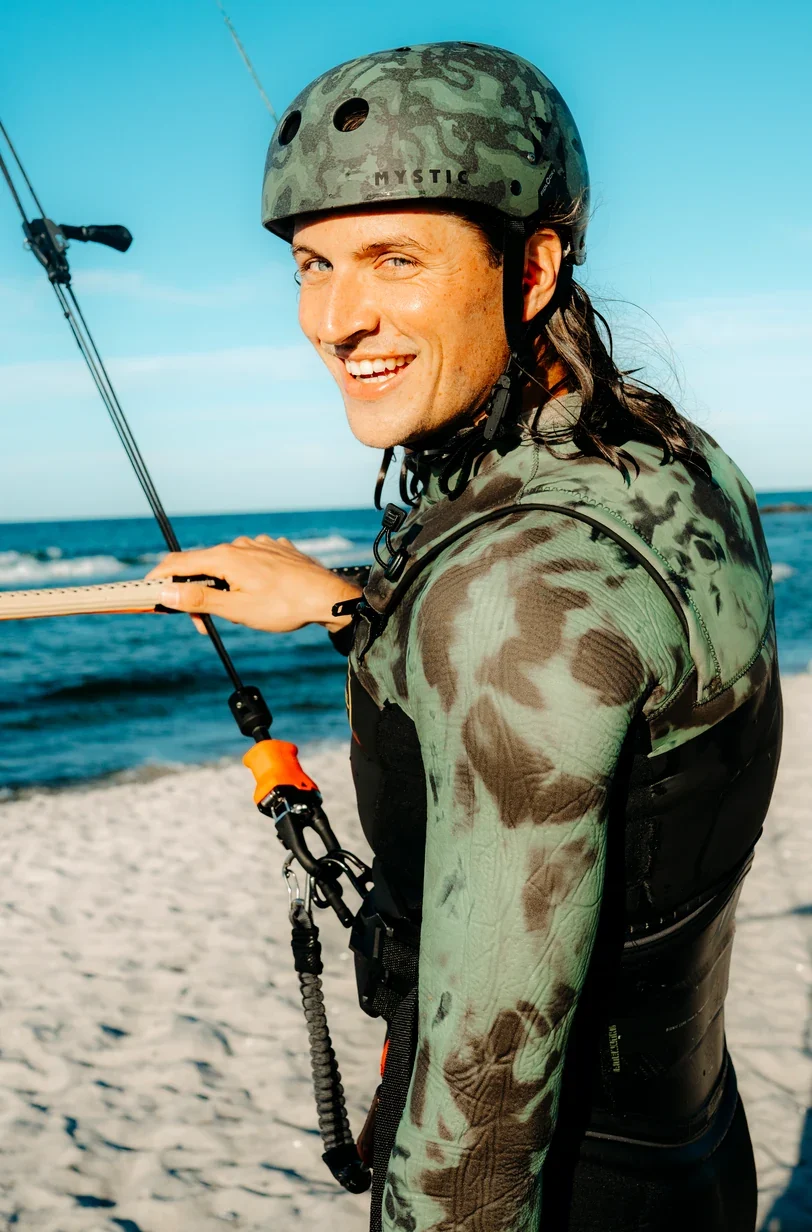
In Kalifornien, Malte has just come back from kitesurfing; unfortunately, the wind was a bit too light, and he was being pulled towards the beach by his kite. Malte is from Kiel and works as a sports and Spanish teacher. He grew up on the Baltic coast. He has never heard of submerged munitions. Nor has his girlfriend, Pauli, who is waiting for him on the beach while he glides across the water’s surface, performing little tricks. She teaches biology and geography, yet she says: this is not something we teach in school. As mentioned at the start, in Germany’s California, all is well at the moment.

Elisabeth Krainer
The journalist and author, born in 1992, mainly writes about society, culture and travel. Her articles appear in publications including the “Süddeutsche Zeitung”, “Stern”, “Vogue” and “Condé Nast Traveller”. She was born in Austria and lives in Munich, Germany.