Second chance
Spent fuel rods still contain vast amounts of energy. Why can we not use it rather than disposing of the fuel rods as radioactive waste?
Using nuclear energy is like taking off in a plane without knowing whether your destination has a runway for landing. This comparison was made by the German Social Democratic Party politician Jo Leinen in the 1980s.
Hey, one might think, building a runway is feasible. The current international consensus – and Switzerland’s notion – is as follows: the safest and simplest option is disposal in a deep geological repository. The plane can land – it just might never be able to take off again. It will be stuck there forever, like in an aircraft graveyard. But would it not be much better if the plane could simply make a stopover?
Recycling makes perfect sense to us. We drink from glass bottles, collect the empties, melt them down and then make new bottles from the molten glass. The process allows waste to once more become a valuable resource. The question is obvious: why not do the same with radioactive waste? After all, a spent fuel rod still contains around 95 per cent uranium. How is it that, in 2026, we carry the sum total of human knowledge around in our pockets, but cannot think of a better solution for disposing of radioactive waste than to bury it in a big, deep and expensive hole?
235 oder 238, Partybeast oder Partykiller
To understand this, we have to take a short physics lesson. Uranium is needed to generate nuclear energy. Uranium is a fairly common ore; it is silvery-white in colour, like iron, and very heavy – heavier than lead. It is called uranium because it was discovered in 1789, shortly after the planet Uranus was discovered. It is a cosmic phenomenon in other respects, too: a product of the merger of neutron stars or the supernova explosions of dying giant stars long before the formation of our solar system. Earth was formed with a fixed amount of uranium. To produce nuclear energy, we need uranium-235. In its pure form, this cannot be found but is always embedded in natural uranium together with uranium-238 – where it accounts for just 0.7 per cent. Uranium-235 is highly fissionable; in other words, when a neutron strikes an atom of uranium-235, it splits. Let’s call it “Party Animal Uranium” to simplify things. One tiny, yet important detail: Party Animal Uranium seems to favour slow neutrons that come flying in at a leisurely pace. To stick with the party analogy: uranium-235 enjoys slow beats. So while it does split easily to those, it allows techno tracks – that is, fast neutrons – to simply whizz right through. Techno tracks don’t cause uranium-235 to split, in fact, they barely get it into the mood for dancing. Uranium-238, on the other hand, is always looking to absorb some neutrons, no matter their speed – it is “Party Pooper Uranium”, an absolute killjoy. In a nuclear reactor, a fuel rod containing 95 per cent uranium-238 and 5 per cent uranium-235 is bombarded with neutrons. Party Animal Uranium splits, releasing extreme heat (which is used to generate our electricity via a steam turbine). At the same time, particles fly off and collide with other party atoms, which in turn split, and so on and so forth – imagine a really great party where the euphoria is contagious.

Massive hangover
After three to five years, just under half of all party atoms have split; they are tired after this and lounge listlessly in a corner of the club. Their excesses have resulted in an extremely toxic atmosphere – in the truest sense of the word: they generated fission products, which are extremely radioactive and very hot, although most of them decay relatively quickly. At some point during the party, they were just becoming a nuisance and spoiling the atmosphere. Because of them, the remaining Party Animal Uranium eventually also lost the desire to carry on partying. At the same time, a lot of the unfazed Party Pooper Uranium is still hanging around: some of it was struck by the neutrons flying around. Where that happened, Party Pooper Uranium gobbled them up, turning into plutonium as a result. Plutonium is highly toxic due to its alpha radiation; it is also extremely long-lived and reacts much faster than uranium-235 – it is the Coke Fiend and life and soul of the party, the one who just doesn’t want the party to end, and who dances to every single track and much more wildly than anyone else.
Actually a brilliant concept: in the process of producing energy, a substance was created that is also capable of releasing an enormous amount of energy. Can’t we just use the plutonium to power nuclear reactors? The answer is: yes and no. No, because a reactor powered solely by plutonium would be almost impossible to control due to its extremely high reactivity. After all, at the uranium-235 party, there are always a few who take a bit longer to get into the groove, who don’t go crazy right away, and who keep the atmosphere at a manageable level. Plutonium party-goers pretty much fly off the handle straight away. Precisely the fact that plutonium is much more compact and “reactive” than uranium-235 is what makes it ideal for nuclear weapons.

Origin of fast-breeder reactors was a recycling concept
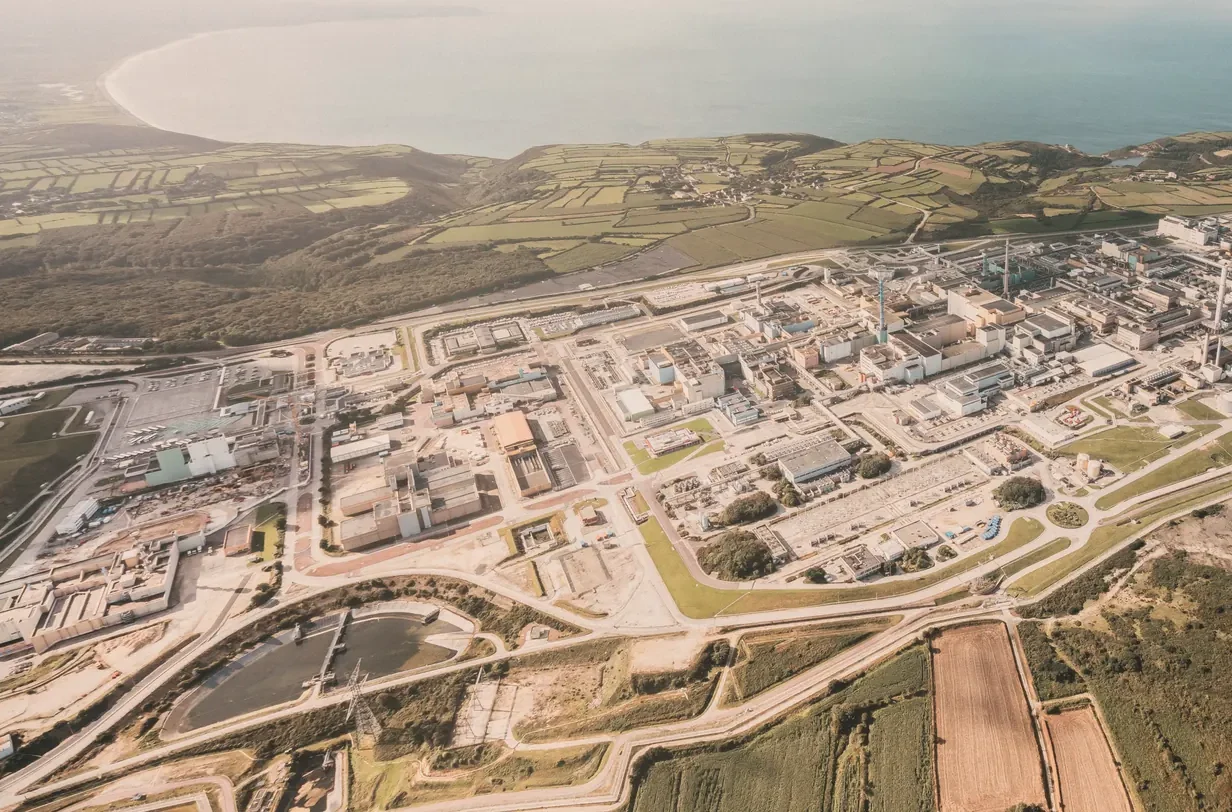
Which brings us to the “yes”: for this, we travel to La Hague in Normandy, France. It is a beautiful area with wild, unspoiled nature, stone houses, a sea that reveals a vast expanse of mudflats at low tide and returns with mighty waves. Set against this idyll is the world’s largest industrial facility for the reprocessing of spent fuel rods. The huge complex, covering around 300 hectares, is operated by Orano, a French nuclear company in which the state holds a majority stake.
Commissioned in 1966, its original purpose was quite different from the seemingly sustainable reprocessing of radioactive waste: after the Second World War, Charles de Gaulle wanted to build a French atomic bomb. For the Force de frappe, the nuclear weapons programme, La Hague was initially used to extract plutonium from the fuel assemblies of reactors built specifically for that purpose. These did not generate any electricity – but they did produce weapons-grade plutonium. Then, in the early 1970s, La Hague was given a new mandate: from then on, spent fuel assemblies from civilian power plants were reprocessed here. However, not for reasons of sustainability, but because there were fears that, with the oil crisis and the nuclear power boom of the 1970s, uranium reserves would soon run out. And that was where plutonium came in!

The concept was rather brilliant: take the Coke Fiends and put them in a room with the Party Pooper Uranium found in abundance in radioactive waste. The fissioning plutonium provides energy and, at the same time, turns the uranium-238 into new plutonium. However, this cannot be achieved with conventional nuclear reactors, as they are water-cooled – because, in addition to its cooling effect, water slows down the neutrons (as we recall: uranium-235 likes the slow beats). For Party Pooper Uranium-238 to turn into plutonium, you need a techno rave. This called for the development of so-called “fast breeders” (ironically, we’ll return to this concept later in this article when venturing a look into the future). Fast-breeder reactors operate just like a normal nuclear power plant, but are cooled using different, less moderating media than water, allowing the uranium-238 to capture the neutrons needed to produce new plutonium.
Conceived and constructed: Phénix was commissioned in 1973, followed in 1986 by Superphénix, which at the time was the nuclear industry’s worldwide flagship project, cooled by liquid sodium. Disillusionment promptly followed: the reactors were plagued by chronic leaks in their cooling systems. Throughout its twelve-year operating lifetime, Superphénix only reached full capacity on 278 days due to sodium leaks and technical faults. The project was an uncontrollable pit eating away billions.
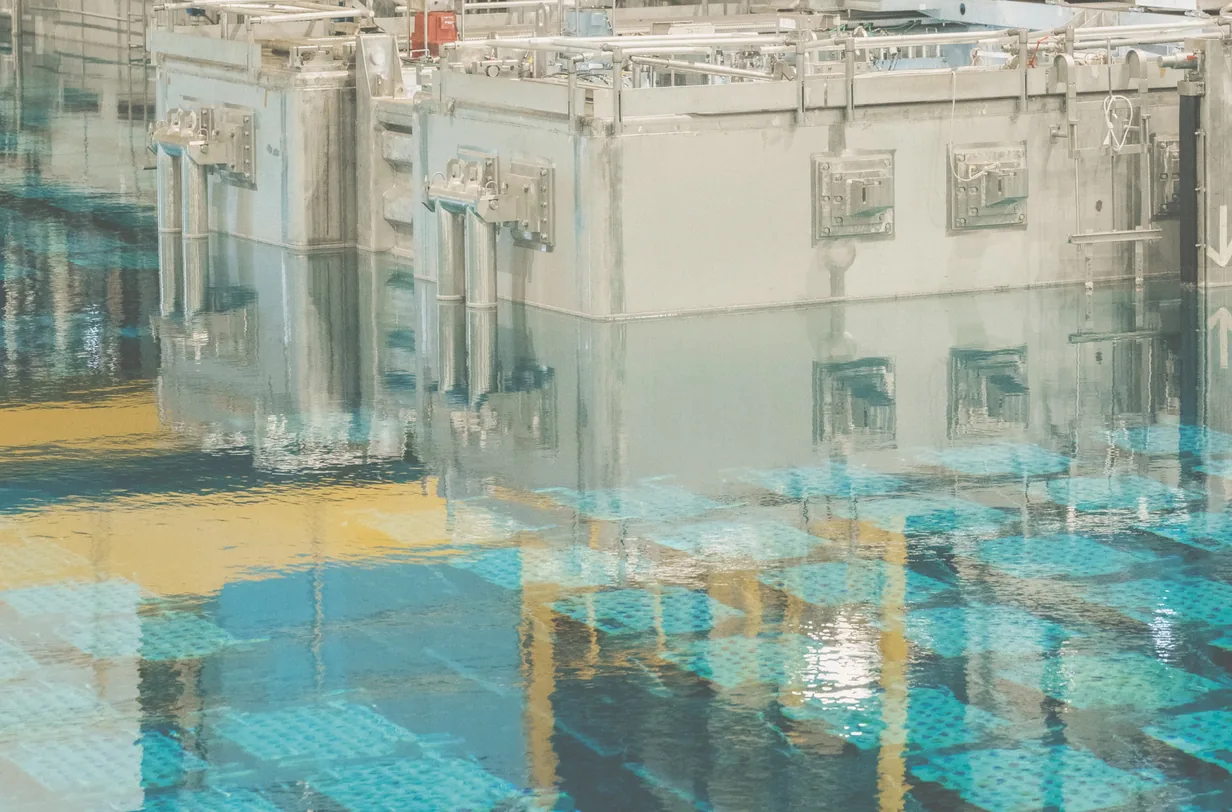
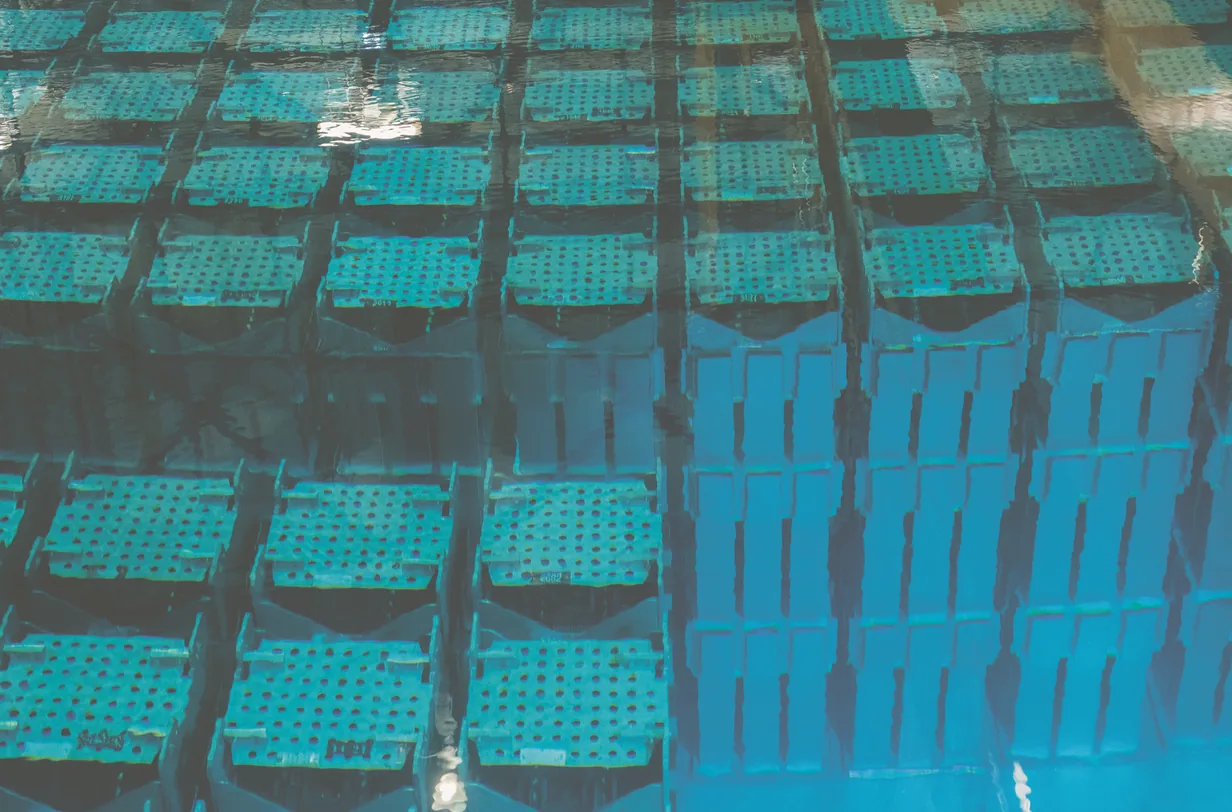
Radioactive waste from all over the world is sent to La Hague on the French Atlantic coast
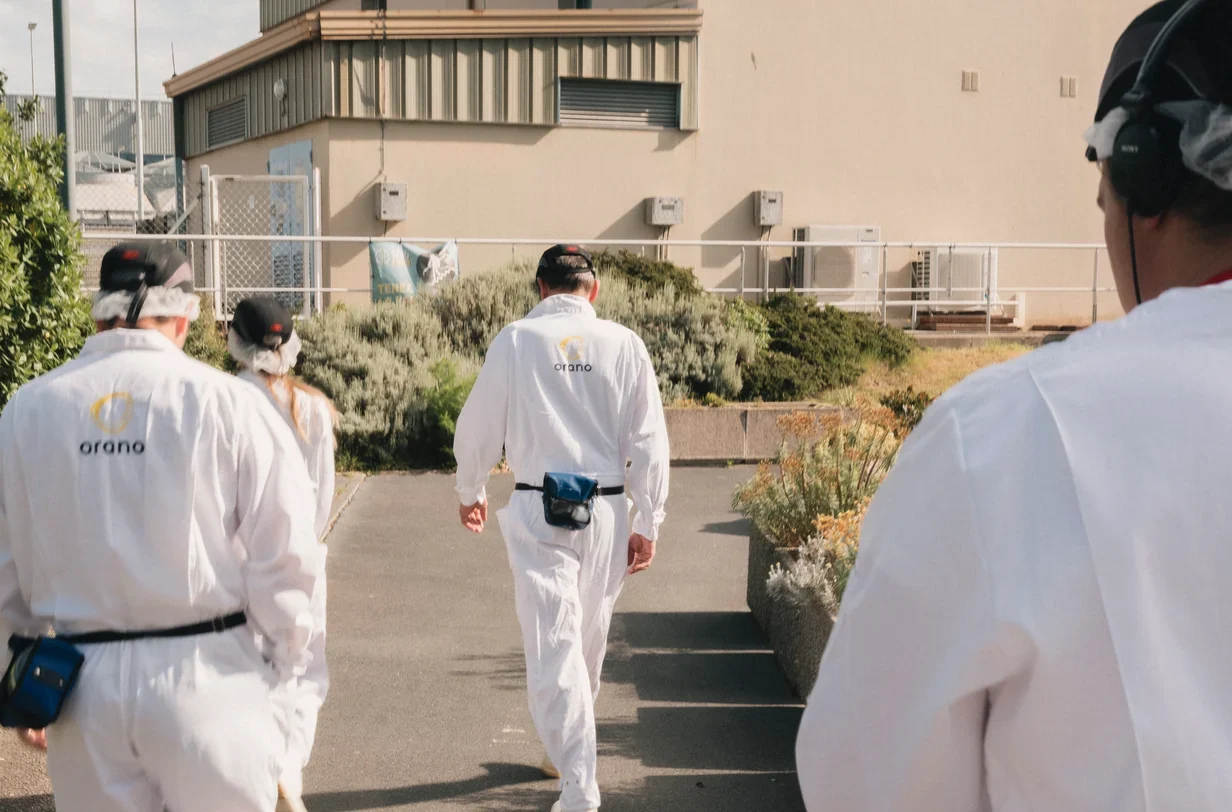
And so, the centre in La Hague became what it is today: a waste-sorting reprocessing facility. You can tell that recycling is taken seriously here as soon as you enter the office building: there is a box where you can donate glasses you no longer need.
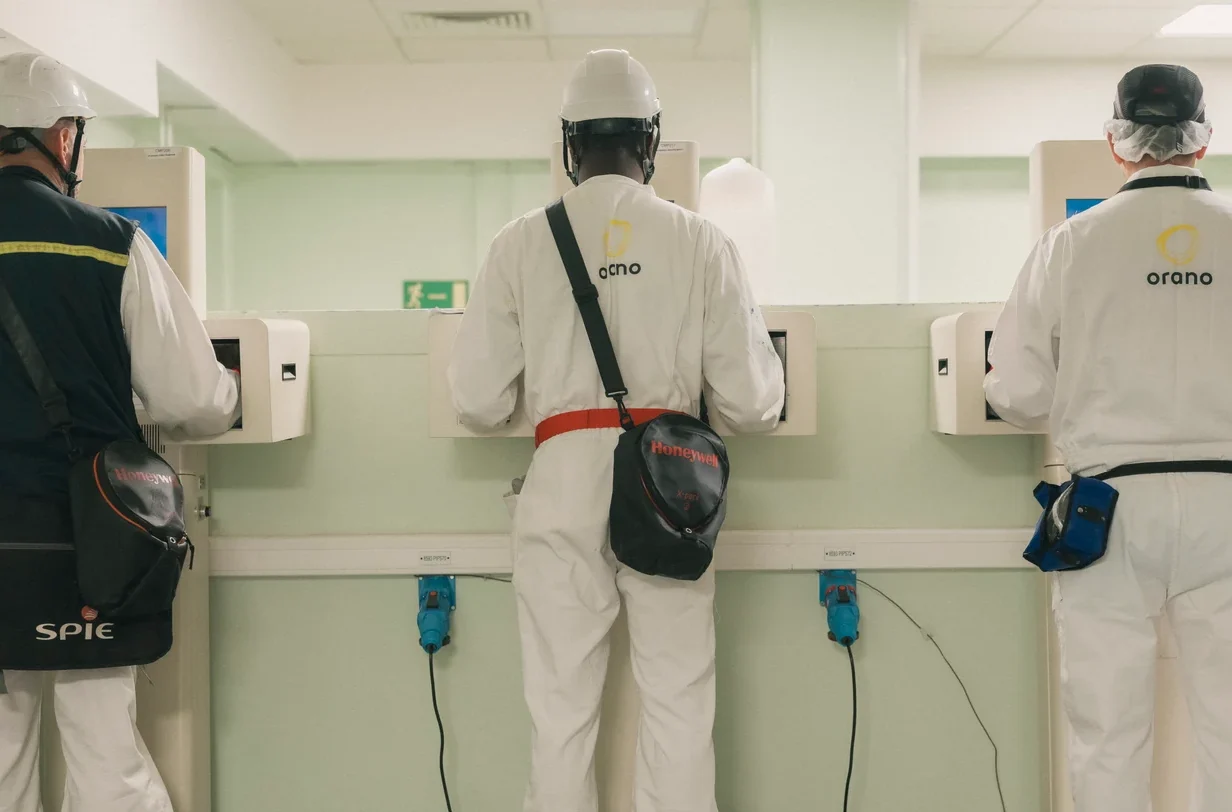
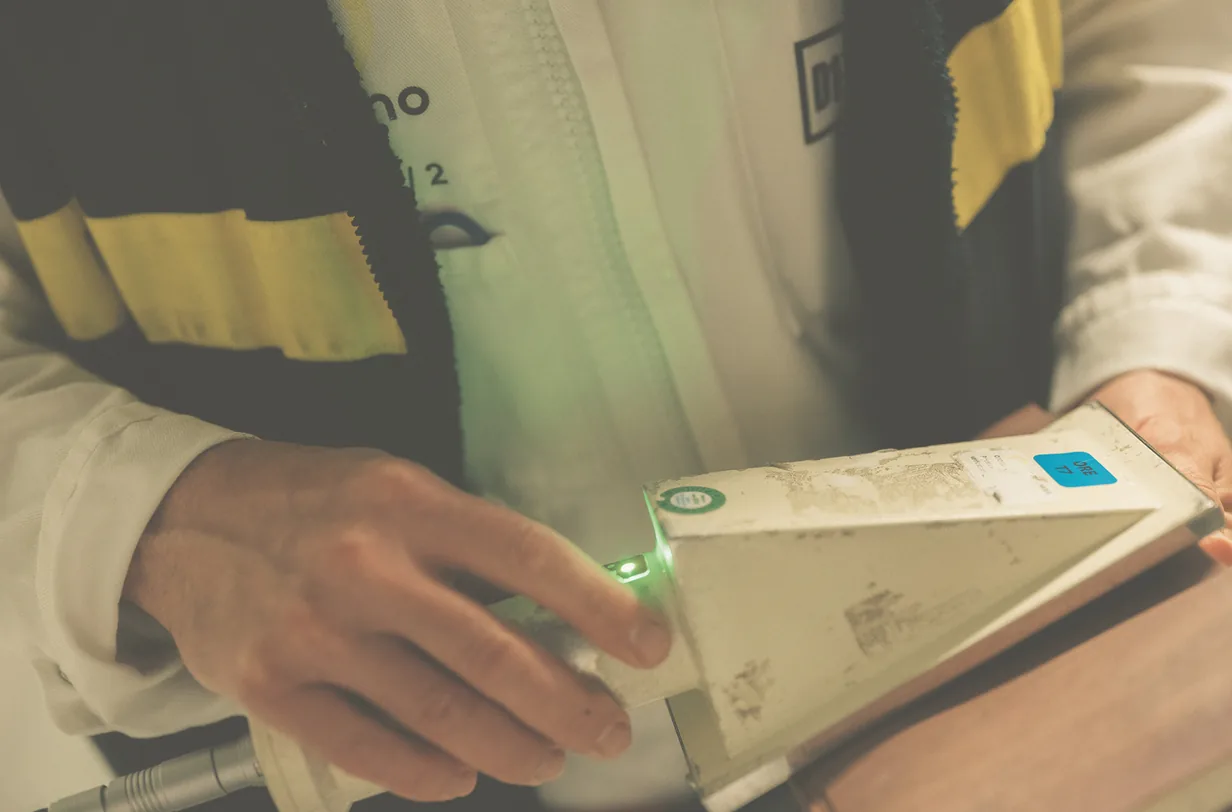
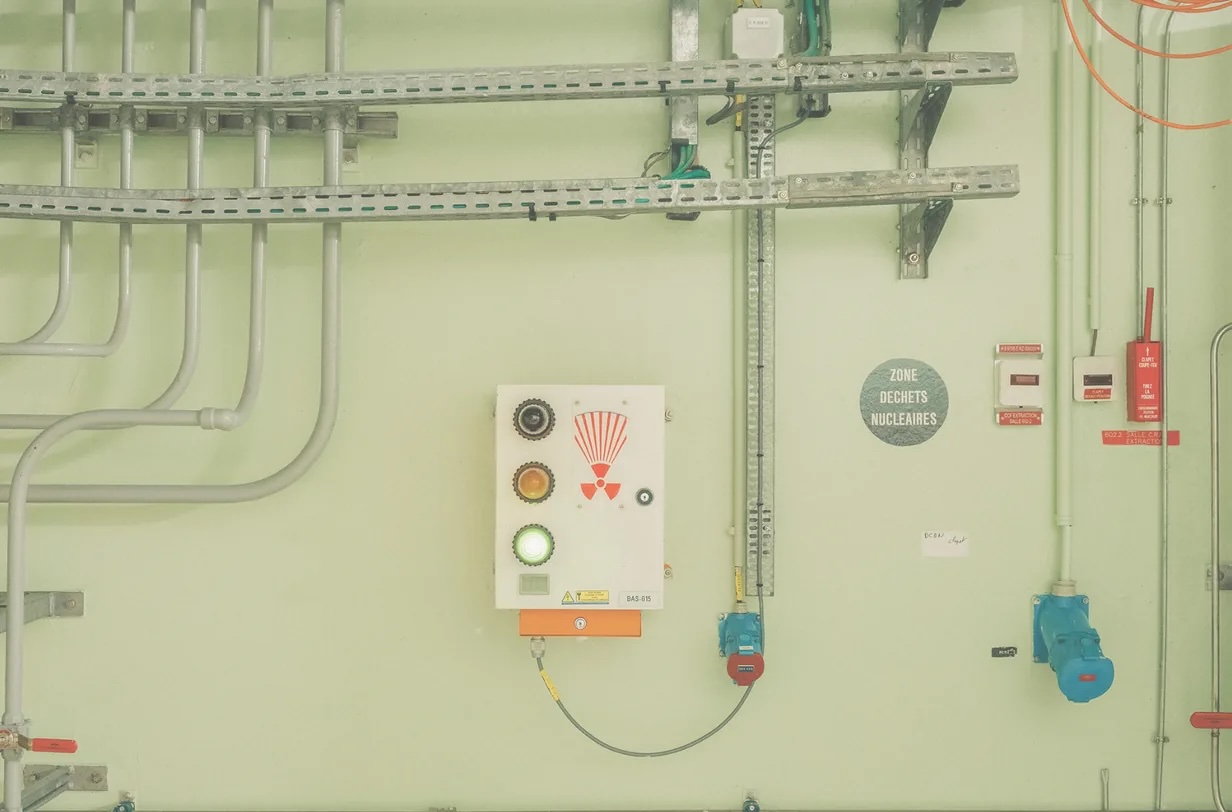
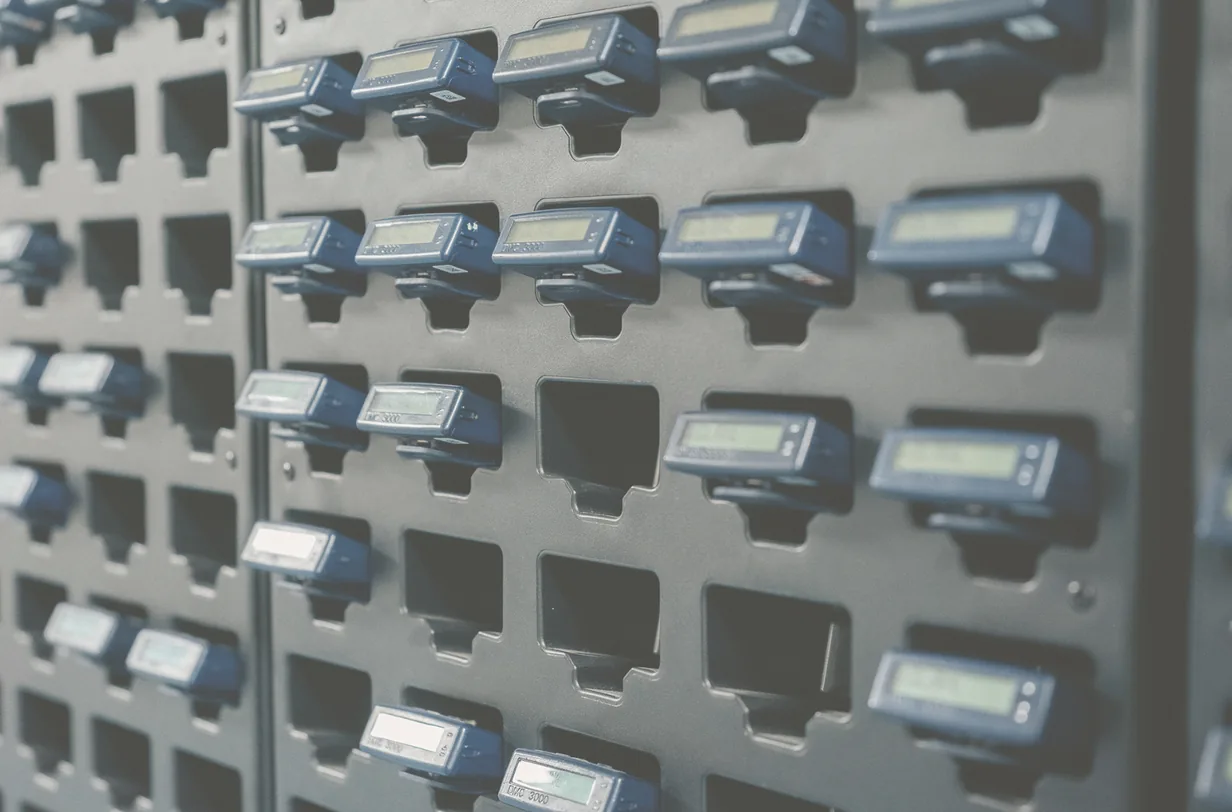
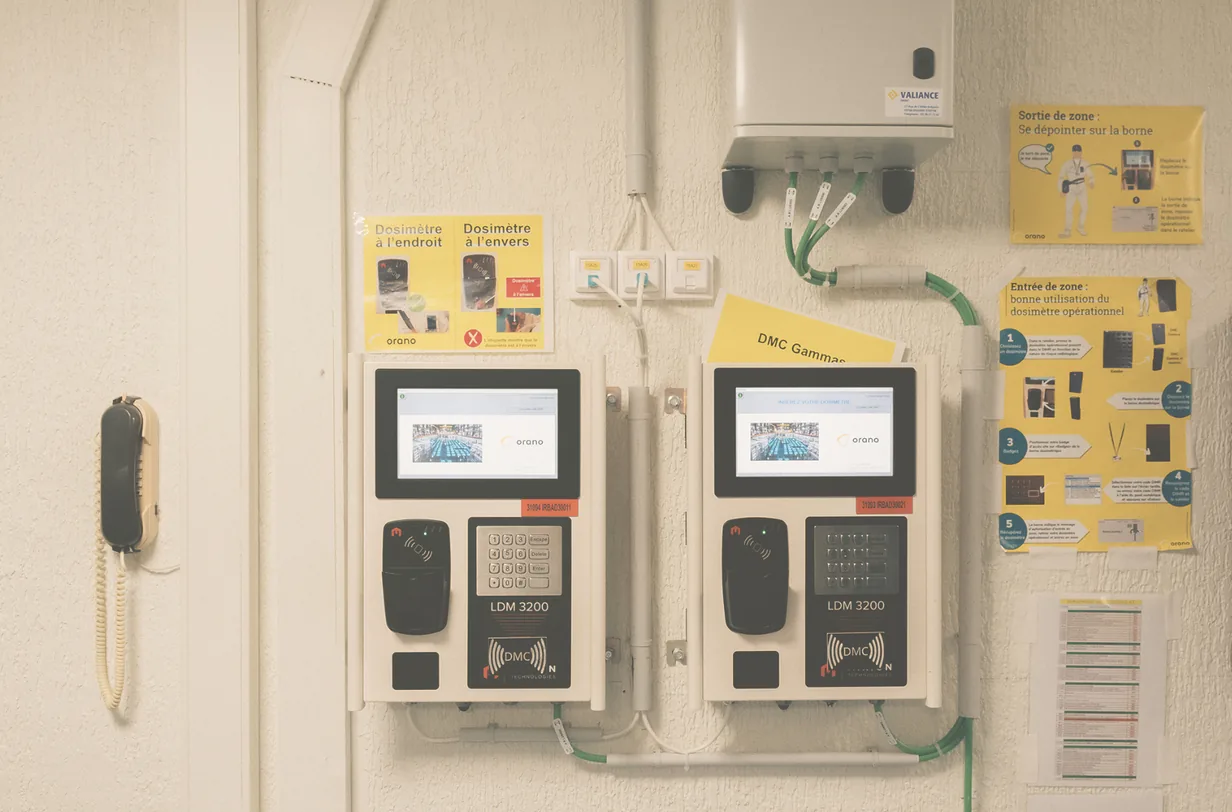
It is eight o’clock in the morning, and crowds of people are streaming into the vast complex of the region’s largest employer. People wait patiently in the various security queues, chatting cheerfully from one queue to the other or with the security staff or the fire brigade – incidentally, as our guide mentions with a touch of pride, the only fire brigade in France authorised to carry weapons. After we have changed, the guide shows us around the grounds. We go past huge control centres seemingly straight out of a sci-fi film, past the Cellule de Déchargement, where the fuel rods are unpacked behind 1.2-metre-thick walls using robotic arms, to the huge, turquoise-blue pool where they are cooled, submerged in four metres of water.
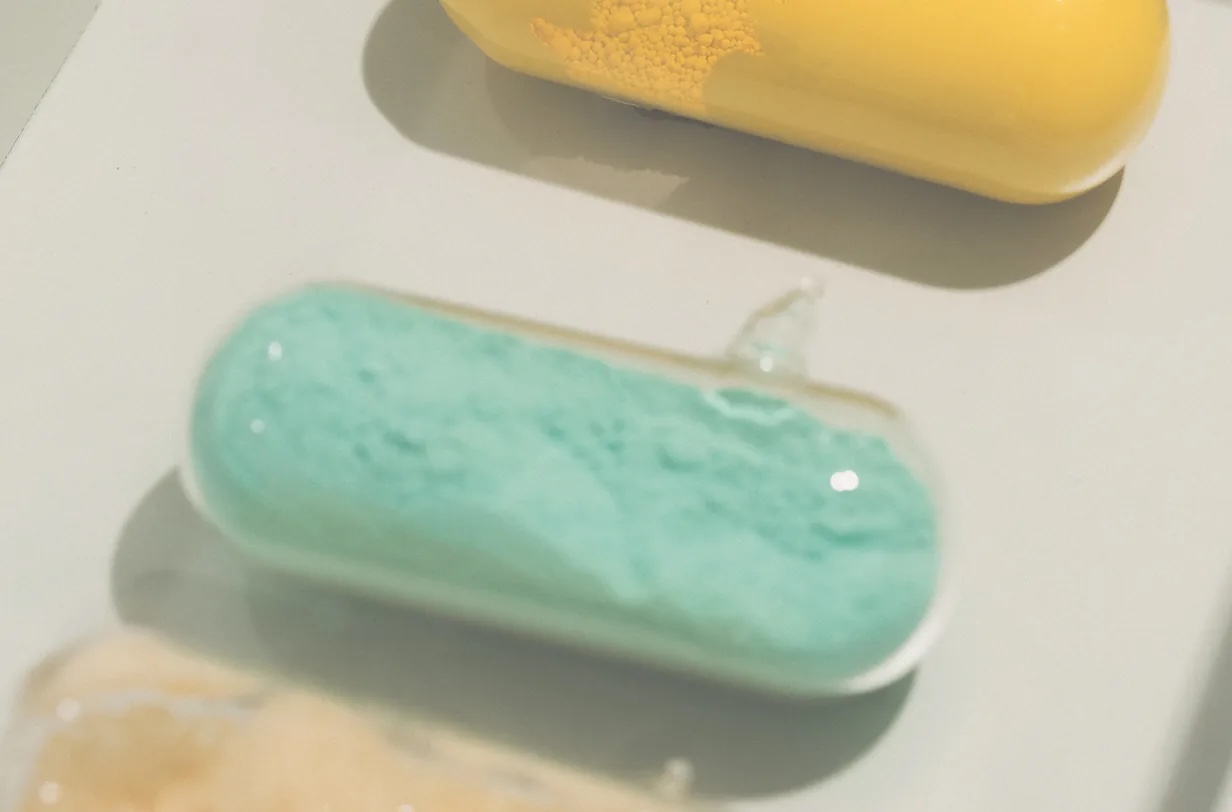
After a few years, the fuel rods are sawed into small pieces, placed in boiling nitric acid and then chemically broken down into their various components. What remains are plutonium, uranium and fission products. The fission products are vitrified and enclosed in steel flasks; the contaminated fuel rod cladding is compressed and also packaged in containers. This is the remaining, actual waste – and since France is not allowed (or willing) to keep other countries’ radioactive waste, it is shipped back, in some cases halfway around the world, to places such as Japan. The French portion will remain in La Hague until it is transferred to the Cigéo repository in the north-east of the country, which is due to begin waste emplacement around 2050.
However, the treasure recovered from this whole process remains in France. The plutonium is processed into what is known as mixed oxide fuel at the affiliate plant, Melox, in the South. In principle, this is the same as what is used in fast-breeder reactors, albeit with a less explosive mix ratio, which is why it can be used in conventional reactors – though always with around 70 per cent conventional fuel rods acting as “moderators”.

Switzerland and three major problems in dealing with radioactive waste
Switzerland was also a customer of this service until 2006. Following a ten-year moratorium, Switzerland ratified the Energy Strategy 2050, withdrawing from nuclear energy altogether. The following three main reasons essentially summarise the major problems associated with the reprocessing of radioactive waste.
Firstly: protests by environmentalists. Reprocessing produces large quantities of new radioactive waste – primarily from the acid bath, which, by the end of the process, has turned into the foulest toxic sludge imaginable, containing high-level fission products. Of course, it is vaporised, purified and filtered, but radioactive wastewater still remains. And this is discharged into the sea from the La Hague plant – not directly off the coast, but via a pipeline a few kilometres further out to sea. It is not easy to say just how bad it is. Orano emphasises strict dose limits and continuous monitoring. According to the organisation, the additional radiation exposure in the surrounding area remains below twenty microsieverts per year – which is less than the amount one is exposed to on a flight from Zürich to New York. Environmentalists take a different view and warn against the long-term accumulation of these substances. Highly dangerous substances such as caesium-137, strontium-90, iodine-129 and americium are absorbed by plankton; the plankton is eaten by small fish; small fish are eaten by large fish; and large fish eventually ends up on our plates. The problem here is the gradually increasing concentration: of course, a single plankton contains very few of these dangerous substances. But even small fish eat a lot of plankton. And large fish eat many small fish. And humans, well, they enjoy a nice seafood dinner, especially when they are vacationing by the sea. Our seafood platter in the small and incredibly picturesque village of Vauville, right on the beach next to the slightly elevated La Hague, was delicious. Eventually we became aware of the fact that we were the only ones eating fish in the restaurant, which was frequented exclusively by locals. But of course, that may just have been a coincidence.




Secondly: money. Reprocessing is extremely expensive. Much, much more expensive than uranium, which is cheap on the world market. The brief panic in the 1970s, when it was thought that uranium reserves were about to run out, subsided following major discoveries in Canada, and prices fell.
Thirdly: the problem recognised at the outset remains unsolved. The remaining waste is returned and this, too, must be disposed of safely.
What does the future hold? Among others, old friends who have undergone some plastic surgery
So that, then, is the current status quo regarding the reprocessing of radioactive waste in 2026. The facts, the here and now. The future, however, has some surprises in store. Start-ups promising to close the cycle once and for all – while satisfying our insatiable appetite for electricity for yet more digitalisation – are springing up like mushrooms. They are called, for example, Newcleo, Moltex, Project Omega and Thorizon. The most high-profile is probably the US start-up Oklo, co-founded by OpenAI CEO Sam Altman. Oklo is planning nothing less than a revolution in nuclear energy. Small, compact reactors that will be situated right next to AI data centres and supply them with electricity. The promise sounds almost biblical: turning radioactive waste into electricity. “Turning waste into gigawatts,” is Oklo’s campaign slogan. The reactors are cooled using liquid sodium. Yes, exactly. Phénix. Superphénix. And, in fact, quite a few details sound strangely familiar. Because although start-ups like to portray themselves as disruptors, many of their ideas seem like old friends that have had some plastic surgery in the form of a new logo.
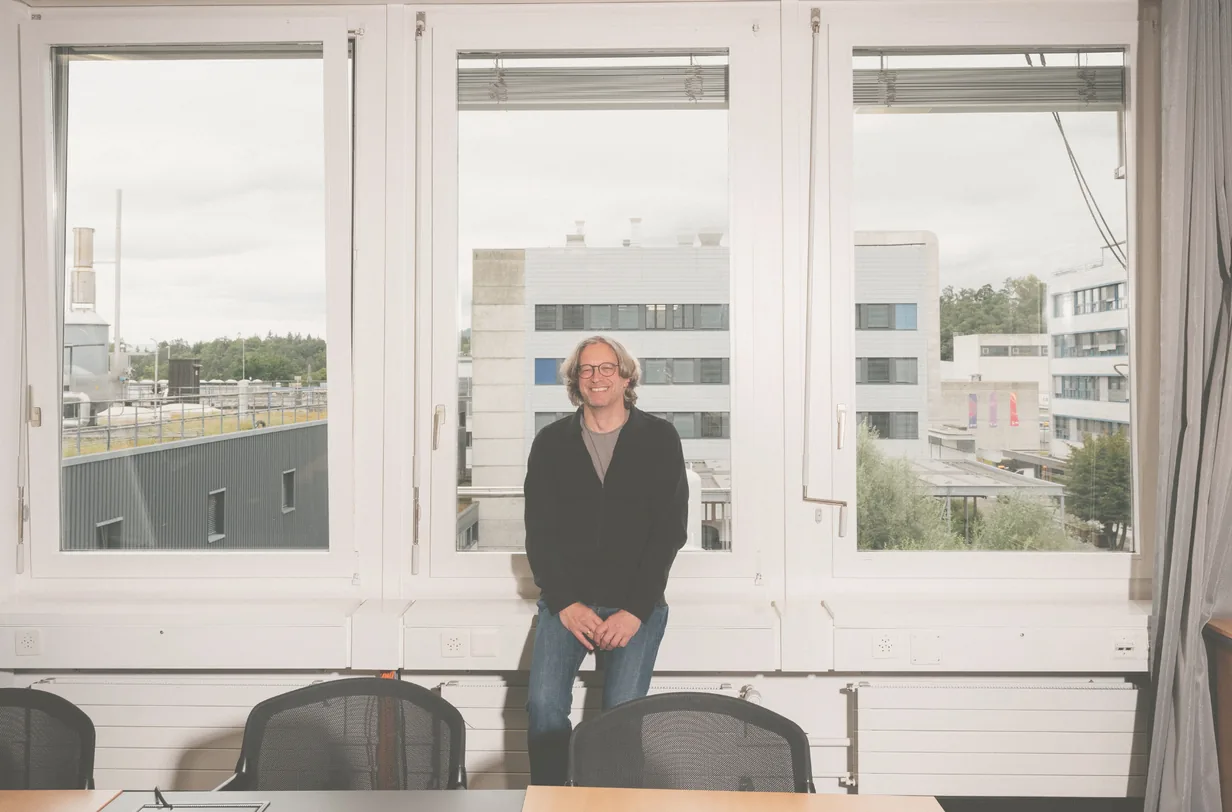
Professor Andreas Pautz of the Paul Scherrer Institute takes a rather restrained stance in view of the “novelty” of some of these concepts. “There’s obviously a lot of marketing involved,” he says. “A certain degree of scepticism is certainly warranted when it comes to some nuclear start-ups.” The nuclear engineer is head of the Research Department Nuclear Energy and Safety (NES) at the Paul Scherrer Institute (PSI) in Canton Aargau. The PSI is the largest research institute for natural and engineering sciences in Switzerland. It is part of the Swiss Federal Institutes of Technology and, with around 2,300 staff, conducts cutting-edge research in the fields of future technologies, energy and climate, health innovation and nature. As Switzerland’s national competence centre for nuclear energy research and nuclear safety, it provides the scientific basis for nuclear safety and future nuclear technology. In collaboration with Nagra, it conducts research into the chemical and physical behaviour of nuclear material deep underground with the goal of contributing to the safety of the deep geological repository. Andreas Pautz is exactly the right person to provide a final overview of the recycling issue.
Not all start-ups that claim to be able to recycle radioactive waste really convince him. That does not, however, mean that the idea is bound to fail. After all, sodium-cooled reactors have been in operation in Russia for decades. Have any start-ups come up with genuinely new, revolutionary ideas? He hesitates. Many of these ideas date back to the 1960s. However, “To claim that all these have ideas have been regurgitated does not do justice to the technologies.” It was simply not possible to put those ideas into practice at the time because, for example, the necessary materials were lacking or computing capacity was insufficient. “We now have better materials, better simulations and a much deeper understanding.”
One standout technology that will solve all our problems one day? Unlikely
He suggests abandoning the pursuit of one reactor capable of doing everything, i.e. generating the maximum amount of electricity while simultaneously transforming long-lived radioactive materials into harmless ones, not to mention generating high temperatures for industrial process heat. When it comes to diminishing existing plutonium stocks as completely as possible, he would opt for molten salt reactors (MSRs) – corresponding experiments are also being carried out at the PSI. The idea in a nutshell: take spent fuel from old, conventional nuclear power plants and dissolve it in molten salt. While this liquid circulates, unwanted waste products can be chemically filtered out – and the plant remains operational throughout. With this approach, uranium and plutonium remain in the reactor until they have been almost completely spent. There will still be some residual waste, but it will only emit radiation for hundreds to thousands rather than hundreds of thousands of years. “Of all the new reactor designs, however, this is the one with which we have the least operational experience,” Pautz concedes. “Essentially, there has so far been only one – albeit very successful – experiment with a molten-salt reactor, and that was carried out in the USA almost sixty years ago. China just recently succeeded in commissioning a new molten-salt test reactor. Nevertheless, I consider this technology to be one of the most promising when it comes to using radioactive waste as a resource.”
And how realistic is it to actually implement this on a large scale? Here, Professor Pautz is as clear as a scientist is prepared to be when it comes to making predictions: “We are no longer infinitely far from that. These are things that could become a reality on a large scale over the next twenty years. But of course, this always requires political will, technical implementation and substantial investments.”

Back to the runway mentioned at the start. According to Andreas Pautz, there is no such thing as the one perfect runway for both take-off and landing. Brief stopovers might be possible, which would allow the aircraft to take off again and be used more than once. But no aircraft can stay in the air forever. At some point, it will have reached the end of its operating lifetime, and then it will be time to find a final parking – or resting – place. In other words, there is no getting round the need for a deep geological repository. That, at least, is indisputable.

Michèle Roten
was born in 1979. She is a journalist and author – and was the person behind “Miss Universum” (“Miss Universe”), Switzerland’s most widely read column in the journal “Das Magazin”, for ten years. Since April 2025, she has been writing the “Sandwich” column for the magazine “Annabelle”. In addition to other works, she has written numerous feature articles, books, a play, ads and scripts for radio and television. Since October 2020, she has been running the storytelling agency Schroten together with Adrian Schräder.