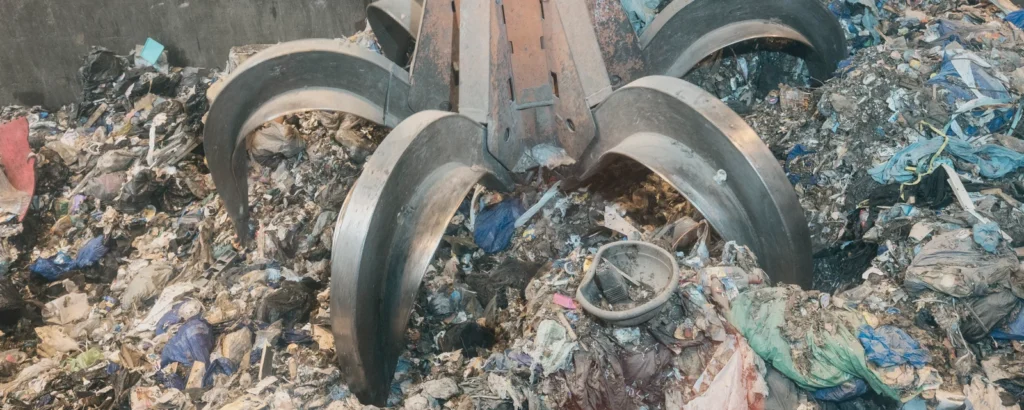
Give us this day our daily bread – no, make it a double burger instead
Starting off the day with a can of Red Bull and a reality soap, stopping at McDonald’s for lunch, feeding on Instagram and Temu in between: what is it like to let yourself go for one day?
I resisted for a long time. For years, people around me had been telling me to watch “Love is Blind”. Two rooms, two people – and a wedding, without the two of them ever meeting beforehand. “Total trash, of course,” they all said, “but still fun to watch. Crazy but good.
I didn’t want to start caring about the Kardashians.
But then I did.
I resisted because I wanted to avoid brain rot. I was afraid I might get hooked on this dating series. No, worse still: I know I am a sucker for this kind of show. It happened before with “Keeping Up with the Kardashians” – I resisted watching that show for a long time, too. I wasn’t interested, and I didn’t want to become interested. Due to some unfortunate circumstances, I ended up watching one episode. It was exactly as expected: scripted crap pretending to be authentic. Artificial emotions designed to convince us that these artificial humans are normal. It’s all so obvious, and yet some part of the brain decides to believe it. I watched every available episode. I could only kick the habit because of the enforced break at the end of the season. I came to my senses and did not return for the next season.
Nothing but sugar for my brain all day long
Normally, I’m quite mindful of what I put into my body. I eat well – not because I’m particularly sensible, but because I enjoy eating food that happens to be good for me. I read books that expand my knowledge; trash novels leave me depressed. The same goes for films and music: I like to be challenged, surprised, confronted with something thought-provoking.
And yet I am not immune to the siren call of the simple, the trashy, the dumb and the easily digestible – as my Kardashians phase demonstrated. Not to mention my overflowing stash of sweets. And I love beer. Unlike my prefrontal cortex, my reward centre is no snob. So I’m actually quite looking forward to this self-experiment: for one whole day, I will indulge in anything trashy. When given the choice, I will consistently opt for the irrational, feel-good option. One whole day of instant gratification.
I start off my experiment the moment I get up: instead of a cup of coffee with milk and no sugar, I knock back an energy drink. A guilty pleasure that I treat myself to about once a week, preferably away from prying eyes. Since my day degenerated into a thoroughly unromantic affair from the moment I got up, I immediately get on Instagram. Why bother gazing out of the window for a bit, listening to the news and slowly smoothing out my sleep wrinkles. Instagram is magical. In no time at all, I learn how dry ice behaves in honey, how you can use a condom wrapper to thread a needle, or how to squeeze toothpaste into a drinking straw if you want to travel light. I watch posts about someone hatching a tortoise egg and someone else creating seamless transitions while painting a wall, and learn how to spot a sweet watermelon.


It’s not even that trashy. Sure, most of it is entirely pointless, but a lot is still interesting – I have trained my algorithm well. Too well. The above-mentioned “no time at all” turns out to have cost me a full hour. For sixty minutes, I just absorbed everything there was to absorb. I didn’t even realise time was flying by. When I become aware of the fact that I have been sitting at the kitchen table scrolling for an hour already, I decide to carry on scrolling on the sofa.
A court jester, at my beck and call
Instagram works like a slot machine. As we scroll through our feed, we never know whether we will next be fed a boring picture, a funny reel or something downright life-changing. This unpredictability triggers the release of the neurotransmitter dopamine in the brain. The brain loves these surprises and wants to keep scrolling until it finds the next “reward”. Fortunately, though, the release of dopamine levels off at some point – after all, the brain isn’t stupid and eventually realises that the content is all rather similar. For me, that happens after around two hours: I get restless, I’m bored, even though the world is clowning about like a court jester on my little device, solely to amuse me. On a normal day, I would now be feeling the urge to do something meaningful. Clean the flat, complete the voting documents, sort out something I have been putting off for ages. At times like these, even an atheist can sense the religious influences in our society: do penance (Catholicism), work (Protestantism). But today is not a normal day for me. So: time to watch “Love is Blind”.
Instagram is like gambling: maybe the next thing I see will change my life.
The premise: 15 women and 15 men first get to know each other “blindly” – solely through conversation. If things feels right between them, they pop the question, meet for the first time, go on holiday together – and marry. There are adaptations of this show all over the world, but of course I watch the original from the “Trash Capital of the World”: the USA. And realise quickly: for me, the worst type of trash is the kind that tries to be “deep”. People who want to show that, at the end of the day, they’re decent folk. They adopt dogs. They run dance classes for mature adults. “It’s not what’s on the outside that counts,” says the man who definitely spends more time grooming the outside of his skull than cultivating what’s inside it. “The most important thing is to be yourself,” says the woman whom I cannot tell apart from any of the others. Fake tears at the memory of being bullied as a child (“Everyone called me ‘beanpole’ because my legs are so long.”)
Fake horror, fake emotion, fake joy. But I’m spellbound. I’m not sure how that happened. For long stretches, I sit curled up in a little ball on the sofa and wonder why anyone would put themselves through this. Watching non-professional actors pretend that they’re looking for love, that they’re opening up, showing their vulnerability, as if something deep inside them has been touched. Of course, they’re not there to find a wife or a husband. They want to become famous, build a brand, or at least enjoy their 15 minutes in the spotlight. And perhaps that is precisely part of the appeal – watching the lengths people go to in order to sell themselves. Trash is honest in its dishonesty.
Better to be misled than bored
And yet: despite watching this show through the most cynical of lenses, I end up succumbing to the romantic narrative and find myself hoping that at least one of the women realises just how funny this guy, this weirdo, actually is. Or that the person whose arm was disfigured after several operations will find herself face to face with someone who doesn’t care about that kind of thing at all. In media studies, this is known as “the suspension of disbelief”: I deliberately switch off my rational mind to let myself be carried away by my emotions. I’m striking a deal with the show’s creators: I’ll pretend it’s real, and you’ll entertain me in return. I am willing to be misled if, in return, I can escape boredom.
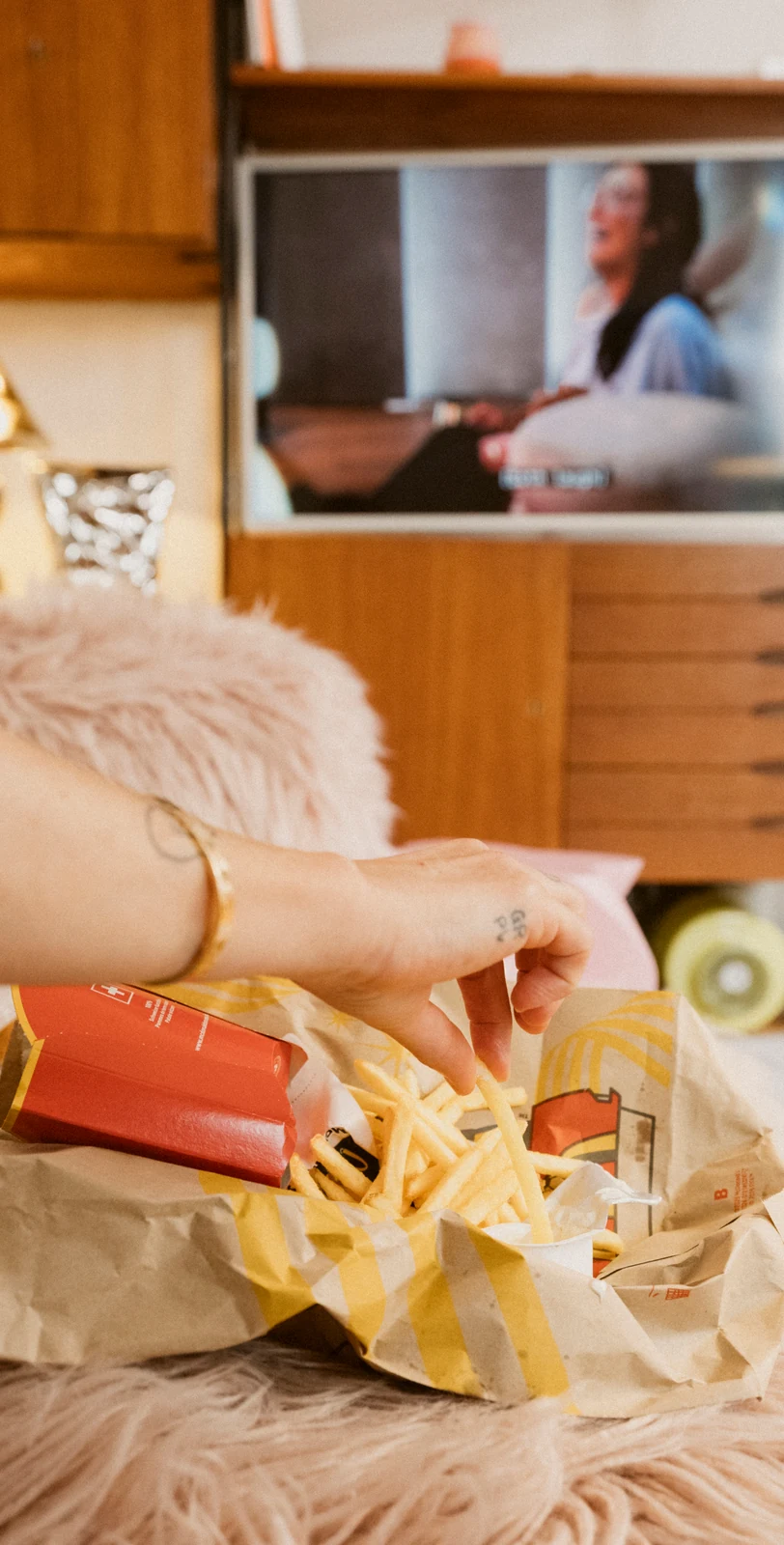
Using two screens at once is obviously absurd and scientifically proven to be bad for you.
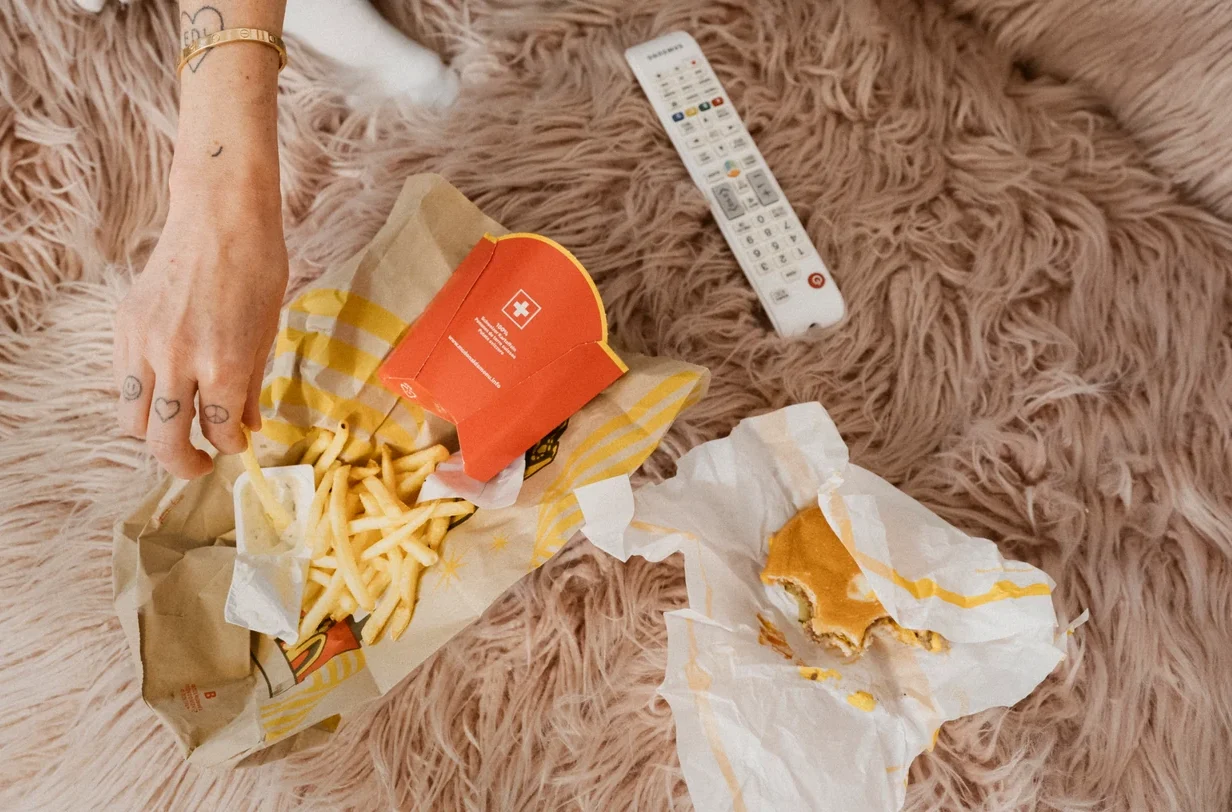


It’s not that bad a deal. I enjoy the constant stream of drivel, paint my toenails and order some – duh – fast food: cheeseburger, fries, Coke. Around 900 calories, maximum enjoyment (fat, salt, sugar – my dopamine system is ecstatic), and there’s not even that much junk in my junk food: the meat and cheese provide around 15 grams of protein as well as some vitamin B12, zinc, iron and calcium. It’s really just the Coke that has no dietary benefits whatsoever. Unless you are willing to interpret 60 grams of sugar as carbohydrates, ignoring the fact that this amount exceeds the WHO’s recommended daily intake of sugar. (Then again, Coke is said to be an excellent remedy for nail fungus and smelly feet. Or so I learned on Instagram.)
And then I deliberately deaden my senses
After consuming my burger while watching “Love is Blind”, my reward centre screams for more. Screen Two, here I come. This is something I do quite often – albeit always with a guilty conscience. Of course, letting yourself be entertained by two screens at once is wrong on so many levels; and science backs up just how bad it is for you. A structural MRI study conducted by the University of Sussex showed that people who frequently multitask on their electronic devices have a lower density of grey matter in the anterior cingulate cortex (ACC). The ACC is the part of the brain that is responsible for regulating emotions, empathy and cognitive control (such as shielding from distractions). What’s more, the brain simply gets used to this constant pursuit of novelty and becomes desensitised to normal input, requiring ever more – and ever more extreme – stimulation.
Instagram would be one option, but I crave an even more intense kick right now: Temu. The ultimate trash, both literally and figuratively. The app stimulates my mesolimbic reward system with wheels of fortune, countdowns, falling prices and virtual vouchers. I scroll through a huge mountain of rubbish made up of brand-new products. A cat brush with a built-in vacuum cleaner (“Low Noise Doesn’t Scare Your Baby Fur Kids”). A miniature washing machine for underwear (“On the Strong Attraction On Beauty Appearance”). An ultra-HD visual ear cleaner (“Dig while looking ear cleaning is safer”). A cigarette holder with a finger-joint clip “for comfortable smoking”. A parasol for your mobile phone. Washable underarm sweat pads. A pair of glasses that let you watch TV while lying on your back.
Temu is the monument we’ve built to our fascination with trash.
Flipping my finger at reason
I have now reached the summit of trashiness. Temu is the monument we have built to celebrate our fascination with junk. Our society’s fascination with the trashy, the cheap, the banal and the useless has always served as an outlet, a deliberate, ironic break with reason. The world is exhausting and demanding. The desire for cognitive relief through the consumption of accessible, easily digestible, instantly rewarding content – from Instagram and TV programmes to fast food and Temu shopping – is obvious. It’s a bit like flipping my finger at reason: I know all of that, but I don’t care. In psychology, this is also referred to as “hedonic reversal”: precisely the objective inferiority of things can, subjectively, make them enjoyable. Which is exactly what we want: to enjoy ourselves, to have fun and to feel good. And for that, we’re willing to put up with being misled. To mislead ourselves. With fake love, food that doesn’t really nourish, and products whose only value lies in being anticipated and unwrapped. After that, they are, even to the person who paid for them, exactly what they were from the very beginning: trash.
I’ve been watching “Love is Blind” for so long now that Netflix is asking me whether I’m still there. The answer is: no. I give up. I now feel so empty and dirty that not even a dopamine rush could help me anymore. What I need now is a more sustainable dose of serotonin. I turn to the Aristotelian approach to the question of happiness: eudaimonic fulfilment through making myself useful. I clean the drains and take the rubbish down. (But I did order the cat brush.)
Michèle Roten
was born in 1979. She is a journalist and author – and was the person behind “Miss Universum” (“Miss Universe”), Switzerland’s most widely read column in the journal “Das Magazin”, for ten years. Since April 2025, she has been writing the “Sandwich” column for the magazine “Annabelle”. In addition to other works, she has written numerous feature articles, books, a play, ads and scripts for radio and television. Since October 2020, she has been running the storytelling agency Schroten together with Adrian Schräder.